Act IV · Dry-down · the corridor
History & Masters
From the temple incense of ancient Egypt and Tapputi's cuneiform tablets to the ghost perfumers behind modern bottles.
A History Written in Scent
From sacred smoke in Egyptian temples to the synthetic molecules of the 1880s , the story of perfumery spans five thousand years, continents, and the full arc of human civilization.
The Ancient World
The word “perfume” derives from the Latin per fumum , “through smoke” , reflecting fragrance’s sacred origins. Ancient Egyptians burned kyphi incense in temples daily, believing scent connected mortals to the divine. They developed sophisticated extraction techniques, creating unguents from lilies, myrrh, and frankincense that would travel the Incense Route to distant lands.
In Mesopotamia, a woman named Tapputi, often cited in histories of chemistry, distilled flowers, oils, and calamus more than 3,000 years ago. Her cuneiform tablets describe processes a modern perfumer would still recognise.
The Golden Age
The Islamic Golden Age revolutionized perfumery through advances in distillation. Ibn Sina (Avicenna) perfected the alembic still, enabling the extraction of pure rose water and essential oils. Arab traders carried these secrets , along with precious oud, musk, and ambergris , to the courts of Europe, transforming fragrance from ritual to luxury.
Renaissance Italy became perfumery’s new center. Catherine de' Medici brought her personal perfumer to France, establishing the tradition that would make Grasse a capital of perfumery , a town still known for its jasmine, rose and tuberose.
The Synthetic Revolution
In 1882 Paul Parquet composed Fougère Royale for Houbigant from coumarin, which Perkin had synthesised in 1868, with oak moss, geranium and bergamot, and the fougère family took its name from it (the Osmothèque dates the launch to 1884). What followed was a run of discovery: the ionones in 1893, musk ketone in 1894, the aldehydes, each opening territory naturals alone could not reach. Chanel No. 5 followed in 1921.
The Century of the Houses
The synthetic breakthrough handed perfumers a palette; the great French houses turned it into an art. Guerlain’s Jicky (1889) had already broken with the single-flower soliflore, weaving bergamot, lavender, vanillin and, reportedly, civet into a composition often called abstract , a perfume that smelled of an idea rather than a garden. Jacques Guerlain’s Shalimar followed in 1925; the Osmothèque files it as a sweet amber, and it is often taken as the model of the oriental family.
Between the wars the perfumer became a named artist. Ernest Beaux’s aldehydic Chanel No. 5, Jean Patou’s opulent Joy (1930) , sold as the costliest perfume in the world , and Jacques Guerlain’s leathery, animalic masterpieces set the vocabulary of modern luxury. After 1947 Edmond Roudnitska brought a new rigor: Dior’s Diorissimo captured a lily of the valley that yields no oil at all, built entirely from synthetics and a perfumer’s memory.
The Designer Explosion
By the late 1970s fragrance was a mass luxury, and the compositions grew louder to match. Yves Saint Laurent’s Opium (1977) and Dior’s Poison (1985) weaponized spice and resin; Giorgio Beverly Hills filled entire rooms. Then, in 1992, Thierry Mugler’s Angel detonated the rules , a chord of patchouli, ethyl maltol and praline , often credited with taking the gourmand family into the mainstream.
The counter-swing was just as decisive. Calvin Klein’s CK One (1994) stripped fragrance back to clean citrus and tea, sold genderless in a flask like an apothecary bottle; Issey Miyake’s L’Eau d’Issey (1992) opened the aquatic era with Calone, a molecule that smells of sea air and melon and exists nowhere in nature.
The Niche Renaissance
The 2000s brought a revolt against the focus-grouped blockbuster. Independent houses , Frédéric Malle’s Editions de Parfums, Le Labo, Byredo, Amouage, Maison Francis Kurkdjian , put the perfumer’s name on the bottle and the raw materials back at the center. Escentric Molecules’ Molecule 01 (2006) went further still, selling a single captive , Iso E Super , as a finished fragrance: radiant, near-invisible, and different on every skin.
Oud returned from the Gulf to dominate Western luxury, naturals staged a comeback alongside ever-finer captives, and in 2015 Maison Francis Kurkdjian’s Baccarat Rouge 540 , a luminous accord of jasmine, saffron and ambergris-like Ambroxan , spread widely online, a sign that in the age of the molecule a single radiant chord could still travel far.
1 sourced · 1 labelled · 2 unsourced
Evidence for this section: 1 sourced · 1 labelled · 2 unsourced
Sources cited here include: Stepanyuk and Kirschning (2019). Synthetic terpenoids in the world of fragrances: Iso E Super® is the showcase
The Complete Timeline of Perfumery
From sacred temple incense to synthetic molecules that smell of concepts never found in nature , trace humanity’s obsession with capturing the invisible.
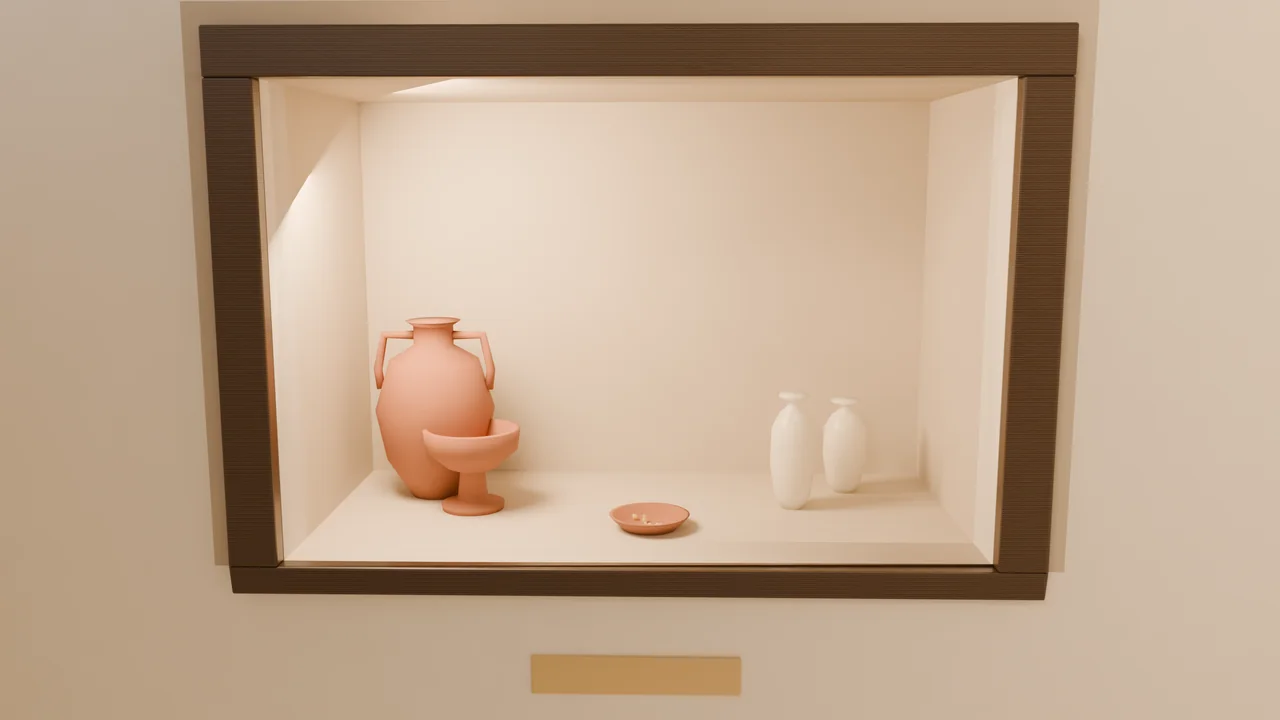
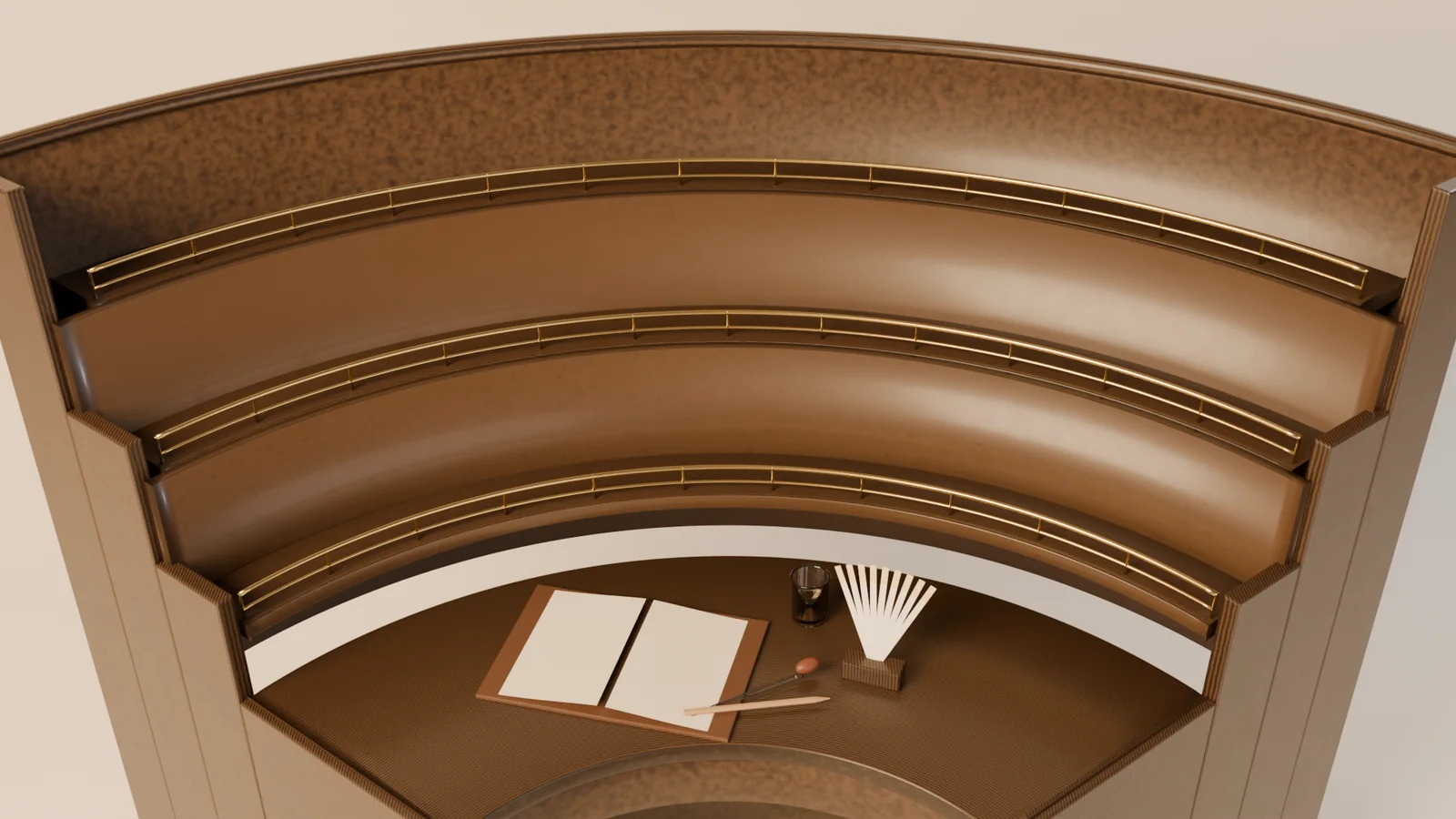
HIST-1 · Ancient World, 3000 BCE – 500 CEa reconstruction, modelled and rendered for this educational archive
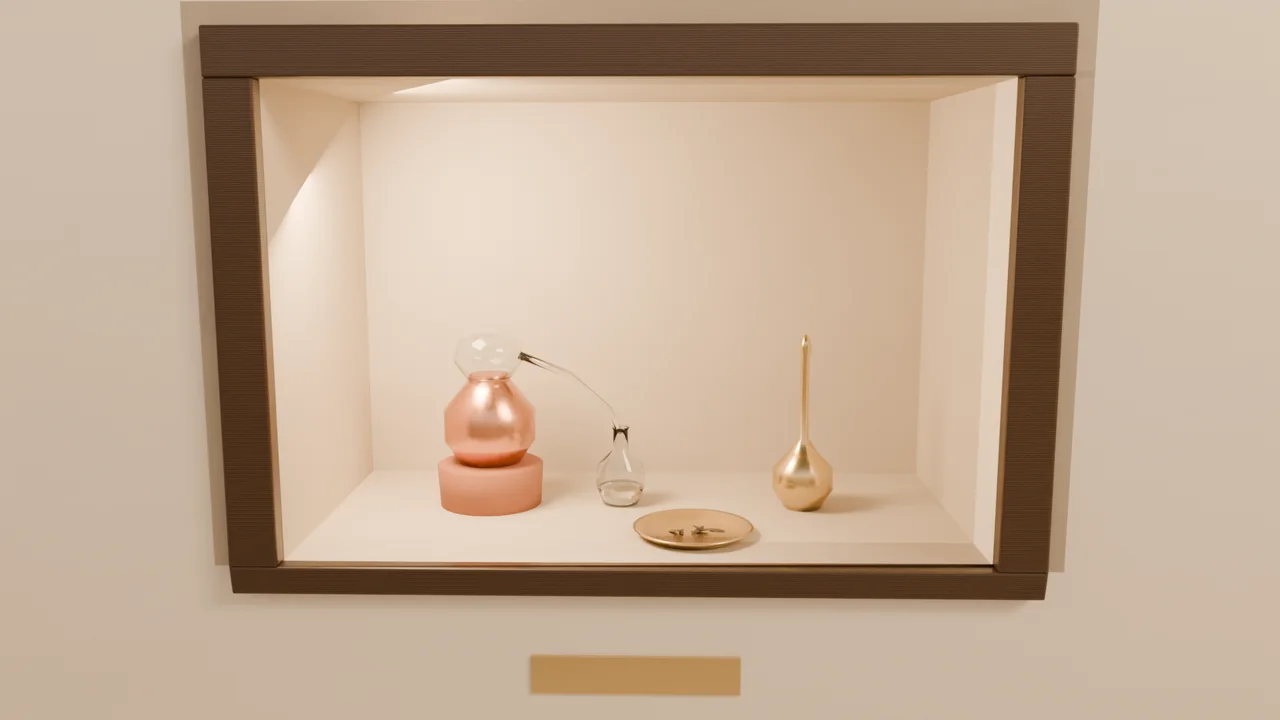
HIST-2 · Islamic Golden Age, 500 – 1400 CEa reconstruction, modelled and rendered for this educational archive
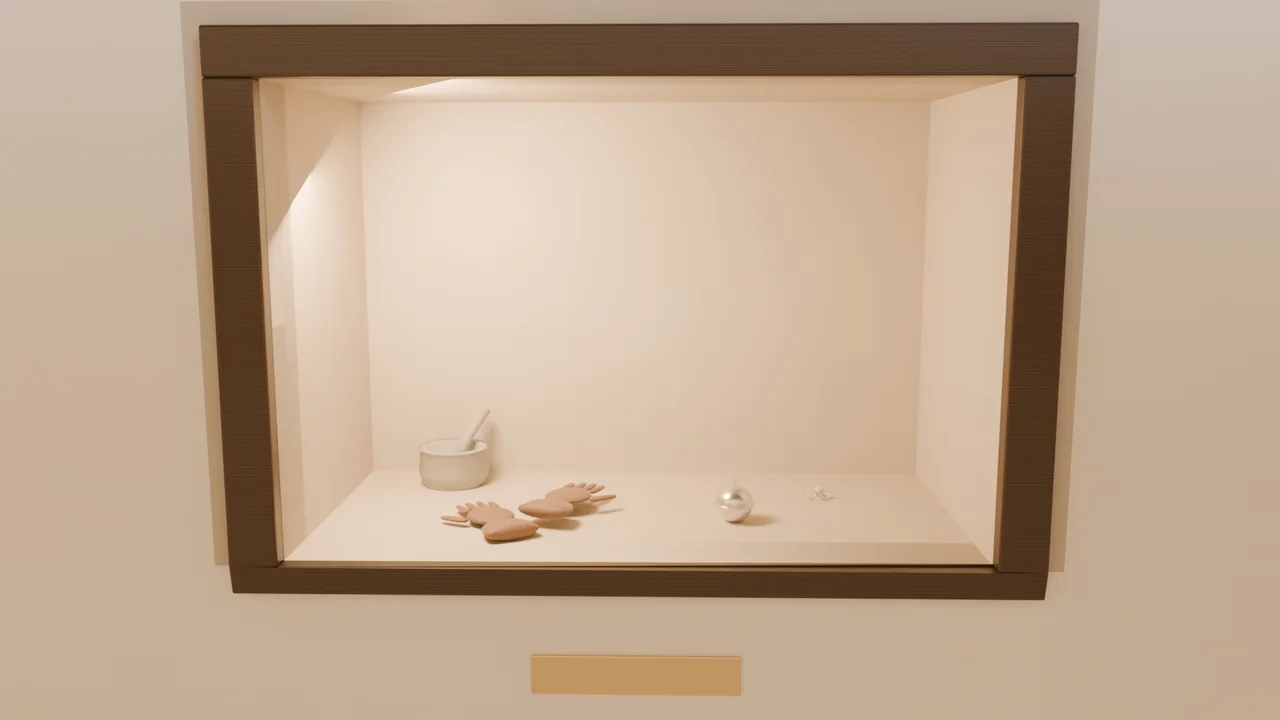
HIST-3 · Renaissance, 1400 – 1800a reconstruction, modelled and rendered for this educational archive
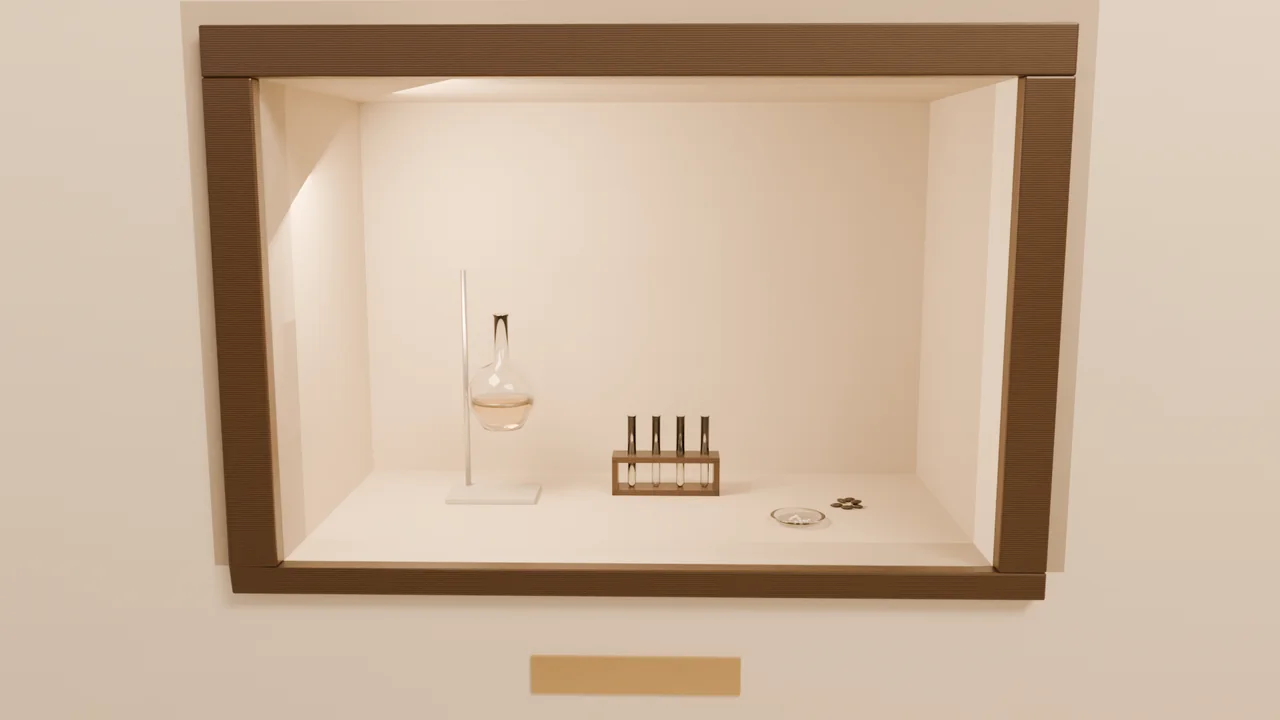
HIST-4 · Synthetic Revolution, 1800 – 1950a reconstruction, modelled and rendered for this educational archive
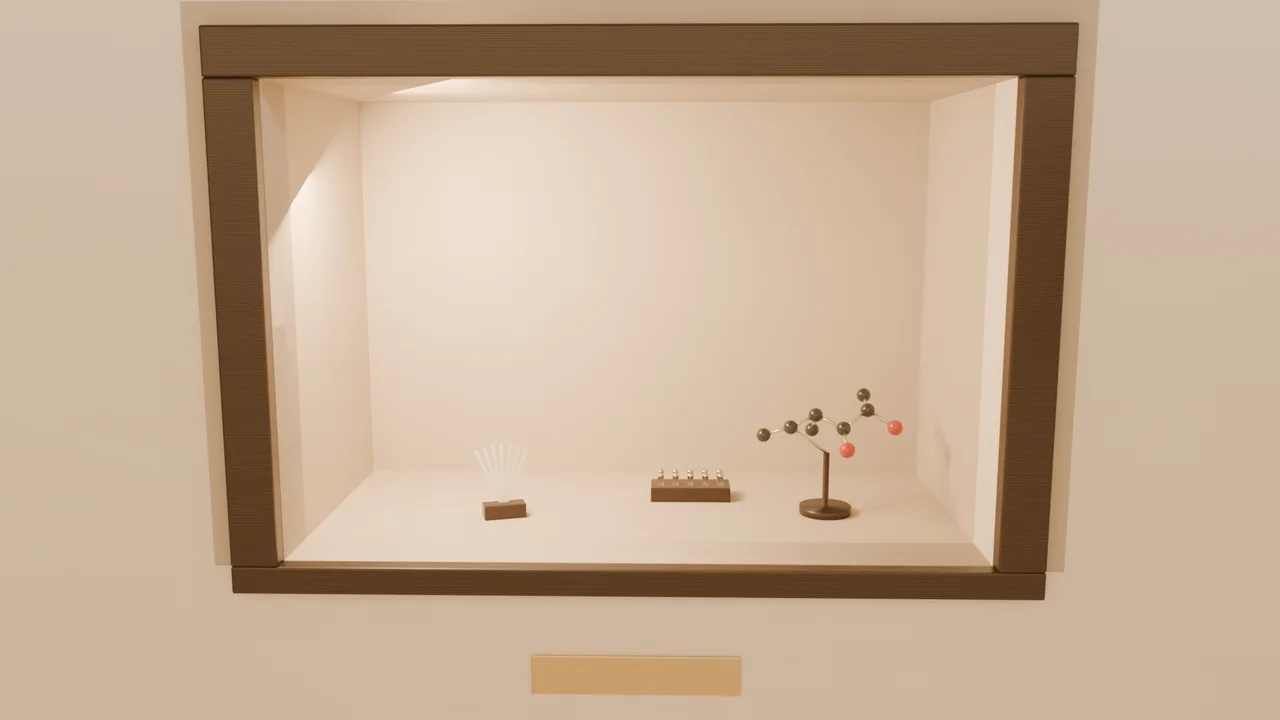
HIST-5 · Modern Era, 1950 – Presenta reconstruction, modelled and rendered for this educational archive
The Ancient World
The word “perfume” derives from the Latin per fumum , “through smoke.” In antiquity, fragrance was not cosmetic but cosmic: a bridge between mortals and the divine. The Egyptians believed scent carried prayers to the gods. Greeks anointed athletes and corpses alike. Romans bathed in rose water by the ton. This was perfumery as sacred technology.
The Islamic Golden Age
While Europe languished in the Dark Ages, Islamic scholars revolutionized chemistry. They refined distillation, and with it the extraction of essential oils. Rose water became both medicine and luxury. Oud, musk, and ambergris traveled the Silk Road. Baghdad, Damascus, and Cordoba became centers of olfactory innovation.
The Renaissance & Enlightenment
Catherine de' Medici brought Italian perfumers to France, establishing the tradition that would make Grasse the world capital of scent. Perfume became inseparable from fashion, politics, and intrigue. Glovemakers-perfumers formed powerful guilds. Louis XIV’s court consumed fragrance so lavishly it was called “the perfumed court.” And in Grasse, a town discovered its destiny.
The Synthetic Revolution
Organic chemistry transformed perfumery from craft to science. Coumarin (1868), vanillin (1874), and the aldehydes enabled scents impossible in nature. Guerlain invented the modern perfume house. Chanel No. 5 democratized abstract luxury. The great classics , Shalimar, Mitsouko, L’Heure Bleue , were born in laboratories, not flower fields.
The Modern Era
Hedione gave perfumery radiance. Calone created the ocean in a bottle. Designer fragrances became billion-dollar businesses. Then came the backlash: niche houses rejecting focus-grouped mass appeal for artistic vision. Today’s landscape spans from the cheapest bottles to the costliest niche ones , and everything in between.
5 sourced · 2 labelled · 9 unsourced
Evidence for this section: 5 sourced · 2 labelled · 9 unsourced
Sources cited here include: Wikidata (Wikimedia Foundation); Stepanyuk and Kirschning (2019). Synthetic terpenoids in the world of fragrances: Iso E Super® is the showcase; Osmothèque, Conservatoire international des parfums
Perfumer Lineages
Perfumery knowledge passes from master to apprentice in unbroken chains spanning generations. These dynasties have shaped how the world smells , their students and stylistic descendants create the fragrances you wear today.
54 sourced · 1 labelled · 22 unsourced
Evidence for this section: 54 sourced · 1 labelled · 22 unsourced
Sources cited here include: Wikidata (Wikimedia Foundation); Osmothèque, Conservatoire international des parfums
Reformulation Tracker
The perfume industry’s dirty secret: your favorite fragrance isn’t what it used to be. IFRA regulations, ingredient costs, and corporate decisions have fundamentally altered countless classics. Here’s the documented truth.
7 sourced · 2 unsourced
Evidence for this section: 7 sourced · 2 unsourced
Sources cited here include: Osmothèque, Conservatoire international des parfums; International Fragrance Association (IFRA)
Vintage vs Modern
What exactly changed between the vintage and the modern bottle? Breakdowns of specific fragrances , batch hints, note changes and the house’s verdict, as opinion.
The Art of the Flacon
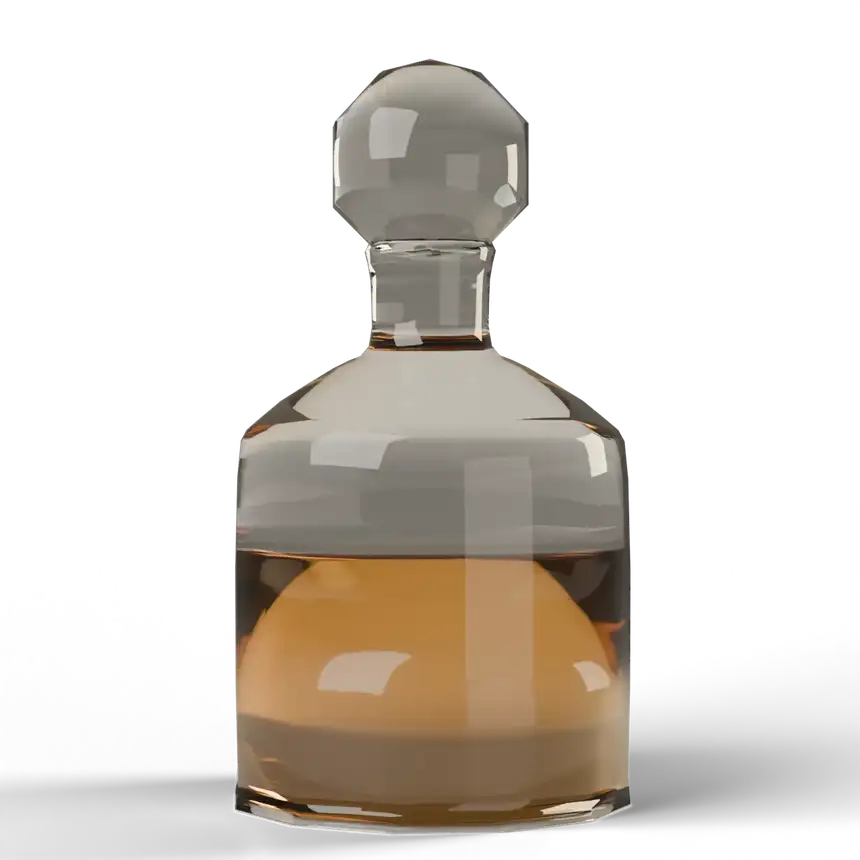
Perfume bottles are vessels of desire , objects that must capture the invisible essence within through visual poetry. Some flacons are collected as art.
Baccarat Crystal Flacons
Crystal Type
Full-lead crystal with a fire-polished surface
Stopper
Ground glass with precision-fit dauber or atomizer
Signature
Acid-etched or sandblasted Baccarat mark on base
Lalique Frosted Glass
Glass Treatment
Satin-finish acid etching on demi-crystal
Motifs
Flora, fauna, and female figures in Art Nouveau style
Notable Works
L’Air du Temps doves, Ambre Antique scarab
The Guerlain Bee Bottle
Gilding
24-karat gold leaf applied by hand
Crystal
Baccarat full-lead crystal, hand-blown
Design
69 bees in honeycomb pattern
Every vessel is modelled and rendered for this educational archive in Blender , references to their eras, not products.
2 labelled · 3 unsourced
Evidence for this section: 2 labelled · 3 unsourced
Failed Masterpieces
Commercial failure doesn’t mean artistic failure. These fragrances flopped at retail but are revered by perfumers and collectors. The market rejected them; history vindicated them.
2 sourced · 5 unsourced
Evidence for this section: 2 sourced · 5 unsourced
Sources cited here include: Osmothèque, Conservatoire international des parfums
Reformulation Secrets
Your favorite fragrance has probably been reformulated multiple times without announcement. Why fragrances change , and what’s really driving the alterations.
Is vintage better? Sometimes genuinely yes , pre-IFRA Mitsouko, pre-reformulation Opium, vintage Shalimar contain materials that are now restricted by IFRA standards (an industry code, not law; in the US it binds only IFRA members) and, for some, prohibited in EU cosmetics (EU law: atranol and chloroatranol from oakmoss, since 2019). The oakmoss-labdanum-bergamot chypre structure changed with those rules. Some fragrances died with their original formulas.
But nostalgia distorts memory. Vintage bottles may have oxidized, degraded, or simply been stored poorly. The “magic” of a remembered fragrance includes context , who you were, who you were with, what the world felt like. No reformulation can restore that. The honest answer: vintage is chemically different; whether it’s better is subjective and situational.
1 sourced · 2 labelled
Evidence for this section: 1 sourced · 2 labelled
Sources cited here include: International Fragrance Association (IFRA)
Master Perfumers
Noses whose work shaped modern perfumery , artists who turned molecules into compositions. Each spent decades training their olfactory memory, learning to identify hundreds of raw materials blind, and composing works that defined entire eras.
The philosopher-perfumer who argued for perfumery as an art. Creator of Dior Eau Sauvage, Diorissimo, Femme (Rochas), and Le Parfum de Thérèse. Eau Sauvage (1966) is often cited for its use of Hedione, and with it the idea of “radiance” , fragrance that floats around the wearer rather than sitting on skin. His writings on perfumery are still read.
Third generation of the Guerlain dynasty, creator of Shalimar, L’Heure Bleue, Mitsouko, and Vol de Nuit. Shalimar is filed by the Osmothèque as a sweet amber; the tale that it began as ethylvanillin poured into Jicky is legend. He reportedly composed by playing piano, translating musical harmonies into olfactory chords. Shalimar is often taken as the model of the oriental family.
Creator of Chanel No. 5 , a fragrance known worldwide. Beaux used synthetic aldehydes at high levels for the time, creating an abstract floral that smelled like nothing in nature. Legend holds this was an accidental overdose; the story is unproven.
The poet of minimalism. In-house perfumer at Hermès for 14 years, creator of Terre d’Hermès, Un Jardin sur le Nil, and First (Van Cleef). Ellena composes with fewer ingredients at higher quality , “writing with a pen, not a brush.” His fragrances feel transparent, luminous, almost watercolor-like. He has also written books on perfumery.
Coty brought fine fragrance to a wider public, and his Chypre (1917) gave its name to a family whose name and theme were older (“chypre” compositions existed before his). He treated packaging and presentation as part of the perfume, working with René Lalique on its bottles, and built a business on the idea that luxury need not be exclusive.
Known for florals. Creator of Trésor, Paris, Eternity, and White Linen. Grojsman is known for a “rose-peach” accord , a combination of rose, linalool, and gamma-decalactone that defined ’80s and ’90s femininity. She worked at IFF for decades and reportedly composed by smell-checking formulas on her own skin rather than paper strips.
Son of Jacques Polge, Chanel’s perfumer before him; now in-house perfumer at Chanel. Creator of Chanel Gabrielle, La Pausa, and Viktor&Rolf Flowerbomb. Olivier carries the weight of Chanel’s legacy while pushing it forward. His father created Coco, Égoïste, and reformulated No. 5 for decades. Olivier represents the rare continuity of a true perfumery dynasty.
Created Le Male at age 25. Founded Maison Francis Kurkdjian. Creator of Baccarat Rouge 540, built on a saffron and ambroxan accord. Kurkdjian bridges classical training and contemporary tastes, creating fragrances that feel both timeless and urgently modern.
The dark poet of niche perfumery. Originally a photographer and makeup artist for Dior, Lutens created the aesthetic of Shiseido before launching his eponymous line. His fragrances , Féminité du Bois, Ambre Sultan, Muscs Koublaï Khän , are unapologetically challenging. He works closely with perfumer Christopher Sheldrake. His vision is singular, uncompromising, unmistakably auteur.
The grande dame of leather fragrances. In an era when women were rarely permitted in laboratories, Cellier created Bandit, Vent Vert, and Fracas , each a departure. Bandit’s aggressive leather shocked 1944 Paris. Vent Vert defined the green family. Fracas deployed tuberose at unprecedented levels. She composed like a man was expected to, without apology, and changed what feminine could mean in perfumery.
Creator of CK One, Acqua di Giò, Hypnôse, and many other widely worn fragrances. Morillas works at Firmenich; most people who wear his work never learn his name. He combines broad appeal with craft.
Known for density and power. Creator of Portrait of a Lady, Carnal Flower, La Vie est Belle, and Ysatis. Ropion builds fragrances like symphonies , massive, orchestral, overwhelming. His work with Editions de Parfums Frédéric Malle produced modern classics. At IFF, his influence spans niche to mainstream.
14 sourced · 2 unsourced
Evidence for this section: 14 sourced · 2 unsourced
Sources cited here include: Osmothèque, Conservatoire international des parfums
Landmark Fragrances
These perfumes didn’t just succeed commercially , they invented categories, changed conventions, and became cultural touchstones. Each one tells a story about its era and about the possibilities of the art form.
Bottle Materials
- Laboratory-grade crystal glass
- Beveled octagonal stopper
- Art Deco minimalist design (1924)
Bottle Materials
- Baccarat crystal flacon
- Blue fan stopper (1925)
- Inverted heart silhouette
Bottle Materials
- Rectangular fluted glass
- Silver-tone metal cap
- Modernist 1960s design
Bottle Materials
- Japanese inro-inspired lacquer
- Gold tassel ornament
- Deep burgundy red glass
Bottle Materials
- Star-shaped flacon
- Cobalt blue glass
- Refillable “Source” system
Bottle Materials
- Conical frosted glass
- Silver sphere stopper
- Minimalist Japanese design
Bottle Materials
- Laboratory flask design
- Frosted glass
- Aluminum cap
Bottle Materials
- Baccarat hand-cut crystal
- Gold-plated zamac cap
- Rouge crystal variant
Bottle Materials
- Heavy midnight-blue glass
- Chrome-plated magnetic cap
- Minimalist masculine design
Bottle Materials
- Deep carmine lacquered glass
- Matte black bakelite cap
- Cream parchment label
1 labelled · 2 unsourced
Evidence for this section: 1 labelled · 2 unsourced
Olfactory Training
How does one become a perfumer? The journey takes many years of intensive study, thousands of hours of smell-practice, and a fundamental rewiring of how you perceive the world. Here is what the path looks like.
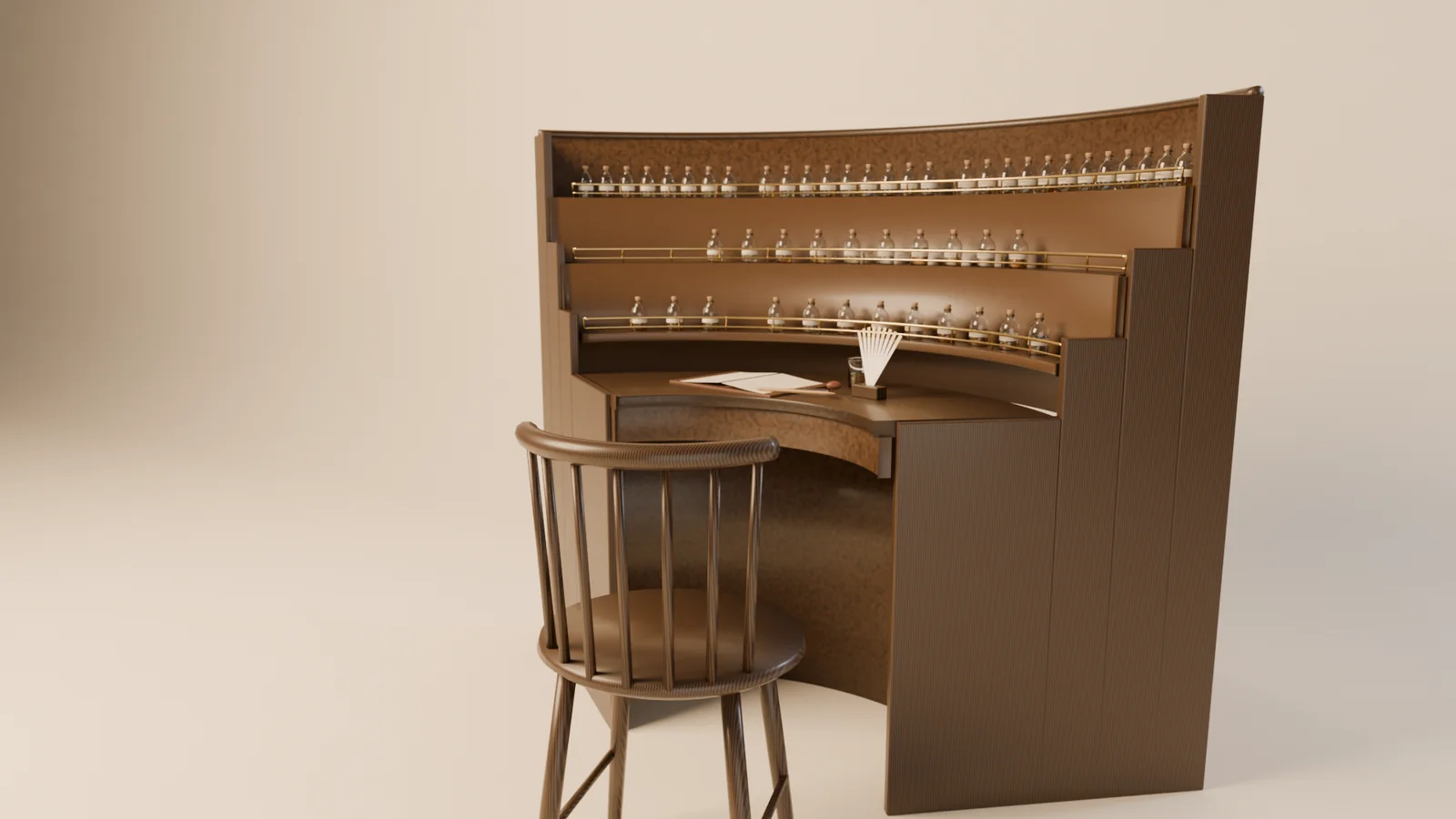
Every perfumery school begins with memorization. Students must learn to identify hundreds of raw materials blind , naturals and synthetics alike. This isn’t just naming: it’s understanding character, volatility, blending behavior, and appropriate dosage. A student might smell linalool again and again before truly “knowing” it. The organ , the perfumer’s workbench arranged like a pipe organ , becomes an extension of memory.
Smelling technique matters. Strips (mouillettes) are dipped into materials, waved gently to volatilize, brought to the nose at a 45° angle. Never sniff directly from a bottle , you’ll fatigue your receptors instantly. Professional perfumers develop rituals: smelling in the morning when the nose is freshest, stepping outside between evaluations, tracking how materials evolve over hours. Some smell their own skin as a “reset” baseline.
After materials come accords , learning to blend notes into unified impressions. The fougère accord (lavender + coumarin + oakmoss), the amber accord (vanillin + benzoin + labdanum), the leather accord (birch tar + isobutyl quinoline + castoreum alternatives). Students spend months on each, understanding how proportions shift the balance. A small change in proportion can transform the impression entirely.
Students analyze classic fragrances by smell, attempting to reverse-engineer formulas. No access to the original formula , just a bottle of Shalimar and the challenge to recreate it from memory. This teaches structure, proportion, and the thinking of master perfumers. Many training formulas are closely guarded; some teachers share only partial versions, forcing students to solve the gaps.
Real perfumery is almost always commercial. Students learn to work from briefs , "Create a fresh masculine for mass market, within a tight cost-per-kilo ceiling, must test well in focus groups." The creative challenge isn’t pure expression; it’s expression within constraints. Cost limits, IFRA regulations, marketing requirements, target demographics. The art is in making something beautiful within the box.
Perfumers develop eidetic olfactory memory , the ability to recall smells with precision years later. This isn’t natural talent alone; it’s deliberate practice. Daily smell-journals, blind identification tests, constant exposure. The goal is to “think” in smell: to compose in the mind before ever weighing materials. Some perfumers dream in scent. The transformation is neurological , the olfactory cortex physically changes.
The Major Schools
Where do perfumers train? A handful of institutions dominate the field, each with distinct philosophies.
Ghost Perfumers
The perfumer whose name appears on the bottle often did not make the fragrance. This has been standard industry practice for over a century. The documentation now exists. The industry knows. The marketing continues unchanged.
Journalist Gabe Oppenheim’s 2022 book The Ghost Perfumer reports, citing Pierre Bourdon’s own testimony, that Olivier Creed was not a perfumer but an evaluator and salesman who took briefs Bourdon had composed and issued them under the Creed name. That is the book’s account; the house does not acknowledge it.[2]
In her 1985 autobiography Estée: A Success Story, Estée Lauder describes personally creating Youth Dew (1953) through her incomparable olfactory gift. The perfumer who actually formulated Youth Dew was Josephine Catapano. Catapano received no public credit during her lifetime. This pattern , founder takes credit, perfumer remains invisible , is documented across the industry’s history.[3]
Edmond Roudnitska is celebrated as one of perfumery’s supreme auteurs , creator of Diorissimo, Eau Sauvage, Le Parfum de Thérèse. Some fragrance historians have argued that Moustache by Rochas (1949), attributed to Roudnitska, owes much to his wife Thérèse , a trained chemist who met him at De Laire (now part of Symrise) and worked alongside him throughout his career. It remains informed speculation rather than documented record , which is precisely the point: the industry’s attribution habits make such questions impossible to settle.[3] Thérèse’s name finally entered the canon in 2000, when Frédéric Malle released Le Parfum de Thérèse , the perfume Edmond composed for her alone, which she wore for decades while it remained unpublished.
Fashion designer Paul Poiret launched Les Parfums de Rosine in 1911, an early couturier’s perfume house. He was photographed in laboratories beside stills with a concerned expression. The fragrances were created by Maurice Schaller and Henri Alméras. Poiret established the template that has governed luxury perfumery ever since: the designer as olfactory auteur, the perfumer as invisible labor.[3]
2 sourced · 7 unsourced
Evidence for this section: 2 sourced · 7 unsourced
Sources cited here include: Osmothèque, Conservatoire international des parfums
House DNA Signatures
Every significant fragrance house has a proprietary base accord that runs through its catalog. These are not marketing concepts , they are actual formula components, often pre-made concentrates, added to new compositions to ensure recognizable house character. Most have never been officially disclosed in full.
Present since Jicky (1889). The Guerlinade is Guerlain’s proprietary base accord: bergamot, rose centifolia, jasmine (assembled in communelle form , a secret Guerlain technique of blending jasmine from different harvests and sources for consistency), iris, vanilla (used in excess since Shalimar 1925), and tonka bean. Guerlain acknowledges the six core components publicly but has never released the full formula or the communelle process.
Ernest Daltroff’s Mousse de Saxe base gave Caron its unmistakable character from the early 1910s: leather, geranium, licorice, and vanilla , a dark accord that contrasted the house’s bright florals. The specific formula remains proprietary. Caron’s Tabac Blond, Pour un Homme, Nuit de Noël, and Bellodgia all carry it in varying concentrations. The base is still in production but the exact recipe has never left the house.
The amber base of Shalimar , opoponax, benzoin, ethylvanillin, tonka bean, labdanum, and iris , is now referred to internally as the “Shalimar opopanine” base by Guerlain. New fragrances in the Maison’s amber family reference this base. Guerlain has started disclosing its existence in marketing materials for the 2025 L’Art et la Matière Les Extraits collection , a public acknowledgment of this sub-accord.
Chanel’s modern compositions , particularly those by Jacques Polge and Olivier Polge , share a characteristic high-linalool, low-citrus freshness that functions as a house signature. Unlike Guerlain’s Guerlinade, this is not a named base accord but an aesthetic philosophy executed through consistent material choices. The technical signature: high proportions of linalool (floral-lavender synthetic), combined with Polge’s preference for natural jasmine absolute at significant concentrations, creates a recognizable airy-floral-clean quality across Les Exclusifs, Les Eaux de Chanel, and many Numéros formulations.
1 sourced
Evidence for this section: 1 sourced
Sources cited here include: Osmothèque, Conservatoire international des parfums
The Houses Behind the Houses
The name on the bottle rarely made the scent inside it. A look at the fragrance oligopoly , its captive molecules, its uncredited perfumers, and the way gender gets marketed.
The Four Names on No Bottle
Open almost any fragrance , a modest department-store spray or a costly “niche” bottle , and the company that actually composed the liquid inside is almost never the one printed on the label. The work is done by a small cluster of business-to-business houses: Givaudan, based in Switzerland; dsm-firmenich, formed when Firmenich merged with the Dutch group DSM in 2023; International Flavors & Fragrances, which swallowed Frutarom in 2018 and DuPont’s nutrition and biosciences arm in 2021; and Germany’s Symrise. Beneath them sit respected mid-tiers , Mane, Robertet, Takasago. Between them these firms formulate most of what the world smells, and they do it for the brands whose names go on the bottle.
The Brief, the Contract, and the Invisible Perfumer
The mechanism is unglamorous. A brand issues a brief , something that might read “modern, confident, woody-ambery, appeals to men 25–40, in the register of a named competitor” , and the houses put their perfumers into competition, sometimes several submissions per slot, to win the contract. The perfumer who wins is frequently never named; for most of the twentieth century the profession was deliberately anonymous, a trade secret kept behind the marketing. And the scale is both enormous and invisible: these same houses make the flavors in your toothpaste, your soda, your crisps. Flavor and fragrance together is a business worth more than thirty billion dollars a year, one most people have never knowingly encountered.
Captive Molecules , the House Secrets
The houses’ real leverage is chemistry they own. A “captive” is a synthetic a house has patented and keeps to itself, and a single one can define a decade. Iso E Super, dated to 1972 in a published review, is a soft cedar-suede transparency that hides in thousands of formulas and, once off-patent, became a fragrance in its own right , Geza Schoen’s Molecule 01. Firmenich’s Hedione, a luminous jasmine note synthesized in the early 1960s, is often cited for the radiance of Edmond Roudnitska’s Eau Sauvage (1966) and is now widely used. And Ambrox , Firmenich’s reconstruction of ambroxide, the key odorant of ambergris (Kao markets the same molecule as Ambroxan) , is the base note of Dior Sauvage. Most people have smelled these molecules many times without knowing their names.
There Is No Masculine Molecule
Nothing in chemistry is male or female. “Masculine” and “feminine” are marketing conventions , fairly recent, and distinctly regional ones at that. The fougère family , lavender, coumarin, oakmoss, built on the template of Houbigant’s Fougère Royale (1882 or 1884) , was coded masculine across the twentieth-century West, while florals were assigned to women. But coumarin doesn’t know this, and the coding doesn’t travel: rose, filed under “feminine” in Europe, is thoroughly masculine across much of the Middle East, worn by men alongside oud. Lavender, now shorthand for barbershop maleness, once scented everyone regardless of sex. These are advertising decisions dressed up as nature.
Ungendered, Then Gendered, Then Not Again
The long view is clarifying. For most of perfume’s history it was simply luxury, worn without gender , Louis XIV’s court drenched itself regardless of sex, and scent marked wealth, not identity. The hard split is a twentieth-century invention, enforced at the department-store counter and in advertising that told men fougère and women florals. The hinge came in 1994, when Calvin Klein’s CK One , composed by Alberto Morillas and Harry Fremont , was sold in a single bottle to everyone, clean and deliberately shared. The niche and artisanal houses, and now a Gen-Z audience impatient with the whole premise, have carried that unisex instinct forward, close to where perfume began.
The Shalimar Dispute
Shalimar (1925) is often presented as an original creation and as the model of the oriental family. The historical record shows it bears extraordinary resemblance to Coty’s Émeraude (1921), released four years earlier. Guerlain’s own histories do not dwell on it.
François Coty’s Émeraude (1921) , bergamot top, floral heart, deep amber-vanilla base , preceded Shalimar by four years. Perfumers who have studied both compositions widely describe the structural kinship as unmistakable. The Guerlain counter-argument centers on the use of ethylvanillin , a more intense synthetic vanillin then newly available , and different resin proportions (particularly opoponax and tonka bean).
The Shalimar–Émeraude resemblance is often cited when priority in perfumery is discussed: the ideas of a successful formula can resurface at a more prestigious house under a new story, and the house that came first may lack the standing to claim them. Whether that is what happened here is debated. This pattern , documented in Gabe Oppenheim’s reporting, in Nez Magazine’s investigations, and in the broader fragrance-history literature , runs from Poiret in 1911 through Creed in 2022. The specific mechanism changes; the outcome does not.
2 sourced · 2 labelled · 1 unsourced
Evidence for this section: 2 sourced · 2 labelled · 1 unsourced
Sources cited here include: Osmothèque, Conservatoire international des parfums
Formula Theft & Reverse Engineering
Every major fragrance formula is technically a trade secret. GC-MS analytical technology makes those secrets reversible. The industry’s response , captive molecules, NDAs, and rapid iteration , is a direct arms race against industrial espionage conducted entirely through chemistry.
Trade secret disputes between fragrance houses and former perfumers have reached the courts; the details of any one case are not filed here. The case illustrates the central tension: to prove misappropriation without disclosing the trade secrets allegedly taken. The filing itself would require Givaudan to enumerate exactly what formulas and methods Krivda allegedly took , which would then enter the public record. Both parties have reason to settle rather than litigate to conclusion.
Three technological and structural forces have made fragrance trade secrets nearly impossible to maintain:
1 sourced · 3 labelled · 1 unsourced
Evidence for this section: 1 sourced · 3 labelled · 1 unsourced
Sources cited here include: Agreement on Trade-Related Aspects of Intellectual Property Rights (TRIPS Agreement), Annex 1C of the Marrakesh…
Perfumery Difficulty & Learning
Perfumery is a demanding creative discipline to master. The learning curve is brutal, the materials are expensive, and the feedback loop is measured in years. Here’s what the journey actually looks like.
Olfactory Vocabulary
You cannot create what you cannot smell. The early years are pure study , smelling reference materials, building mental associations, learning to distinguish linalool from linalyl acetate. Beginners can name only a handful of materials blind; professionals know hundreds.
Accord Construction
An accord is 2-5 materials that blend into something greater than their parts. Fougère = lavender + coumarin + oakmoss. You’ll spend years learning why some combinations work and others clash. Most of your experiments will fail. The balance of top, heart and base becomes intuitive.
Full Composition
A finished fragrance can hold dozens of materials. Balancing them requires understanding volatility curves, tenacity, sillage, and how materials behave over 8+ hours on skin. Your formulas will go through many iterations, and a single composition can take years to finalize.
Professional Mastery
At this level you’re working from a concept to a formula without trial-and-error. You can read a brief and know which materials you’ll need. You understand IFRA restrictions, cost optimization, stability testing. You can create for a target demographic. You’ve trained your nose for many thousands of hours.
A basic evaluation kit costs a few hundred to a few thousand dollars. A professional organ costs far more. Premium naturals (orris butter, rose absolute, oud) are very costly. Every failed experiment costs money.
Minimum startup: a modest budget for a starter set of materials, scales, pipettes, alcohol, and mouillettes.
Professional perfumers at major houses train full-time for years before creating their first released fragrance. Self-taught perfumers working part-time should expect many more years to reach comparable skill. There are no shortcuts , only repetition and refinement.
Daily practice: a few hours of smelling, blending and evaluation; the nose tires after a few hours.
ISIPCA (France)
A long-established school. 2-year masters program in Versailles. Requires chemistry background. Graduates are recruited directly by the major houses.
Grasse Institute of Perfumery
1-year professional program in the birthplace of French perfumery. Focus on both technical and creative aspects. Strong connections to Grasse-based natural material producers.
Self-Directed Study
Textbooks (Arctander, Carles), online courses (Perfumers World, IFF Masterclass), community forums (Basenotes, r/DIYfragrance). Slower but accessible. Requires self-discipline and willingness to fail repeatedly.
"Perfumery is an art of a sense closely tied to emotion , and that is what makes it both powerful and difficult. You cannot intellectualize smell. You can only smell."
Jean Carles · Founder of Modern Perfumery Education
4 labelled
Evidence for this section: 4 labelled