

The HombreOils field guide
The chemistry, craft and history of fragrance.
Discover the materials behind scent, explore the science, and build your own olfactory vocabulary.
Enter the world of scent
Explore by
Wherever you enter, the records lead somewhere else: a material to its molecules, a molecule to the words for its smell and the accords that use it, an accord to the fragrances and the history behind it.
from the records
Each count and each first record below is read from the records when the site is built; every record page shows the source of each of its fields. The evidence register lists the claims the pages make, with their status.
Material
What goes into the bottle, and how each is obtained.
Start with Bergamot essential oil
Molecule
The aroma molecules, where they occur and how they smell.
Start with Methyl dihydrojasmonate (Hedione)
Place
Where the materials grow, and when they are harvested.
Start with Grasse
Perfumer
Perfumers of the past, with their dates and their works.
Start with Ernest Beaux
Fragrance
Fragrances of other houses, as documented references.
Start with Chanel No. 5
History
Houses, syntheses, launches, laws and prizes.
Start with Perkin reports a synthesis of coumarin, 1868
Science
The words for a smell, and the molecules that carry them.
Start with Powdery
Accord
How a family is built, in modeled parts; never a formula.
Start with A rose, from four molecules
Regulation
What IFRA and EU law restrict, prohibit or label.
Start with IFRA Standard: Oakmoss extracts
Plant
The botanicals behind the materials, with where they grow.
Start with Rosa damascena
Bottle
Bottles in museum collections, from their museums’ open records; not HombreOils products.
Start with the bottles by date
The HombreOils collection
Rare natural essences, historical materials and unusual olfactive treasures.
Browse our materials

Where chemistry
becomes poetry
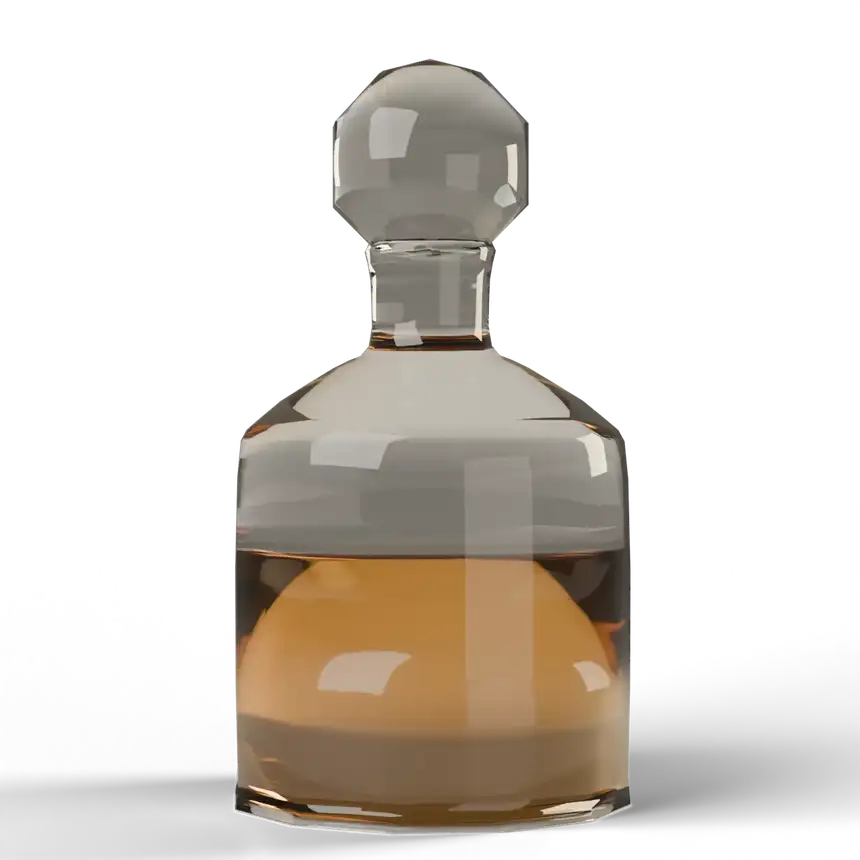
Historic bottles shown for educational reference. Trademarks belong to their respective owners; no affiliation is implied.
Perfumery exists at the intersection of organic chemistry, botany, neuroscience, and artistry. Smell takes an unusually short route to the brain's emotional and memory regions, one reason a scent can move us before we have named it.
It is one reason a scent can bring back a place or a person so vividly: a single breath can return something years old, not as a vague impression but as something close to being there again.
A perfumer , or nose , spends years training olfactory memory: learning to identify hundreds of raw materials blind, understanding how molecules interact, evolve, and transform on human skin. Every molecule on these pages was selected for scientific significance, not commercial importance.
Have a smell in mind but no perfumer’s words for it? The Scent Translator reads a phrase such as “an old library after rain” and shows the scent concepts it may point to, as three possible readings, with the materials and molecules on record behind each. Nothing you type is stored or sent.
The HombreOils collection
Rare perfumery, preserved
Explore the materials, methods and histories behind scent. HombreOils brings its collection of historical perfumery materials together with a practical reference library for curious noses, collectors and perfumers.
Follow a plant to its origin, a material to its molecules, and an accord to the fragrances that helped define a family.